

Monsanto Scientist Fred Perlak
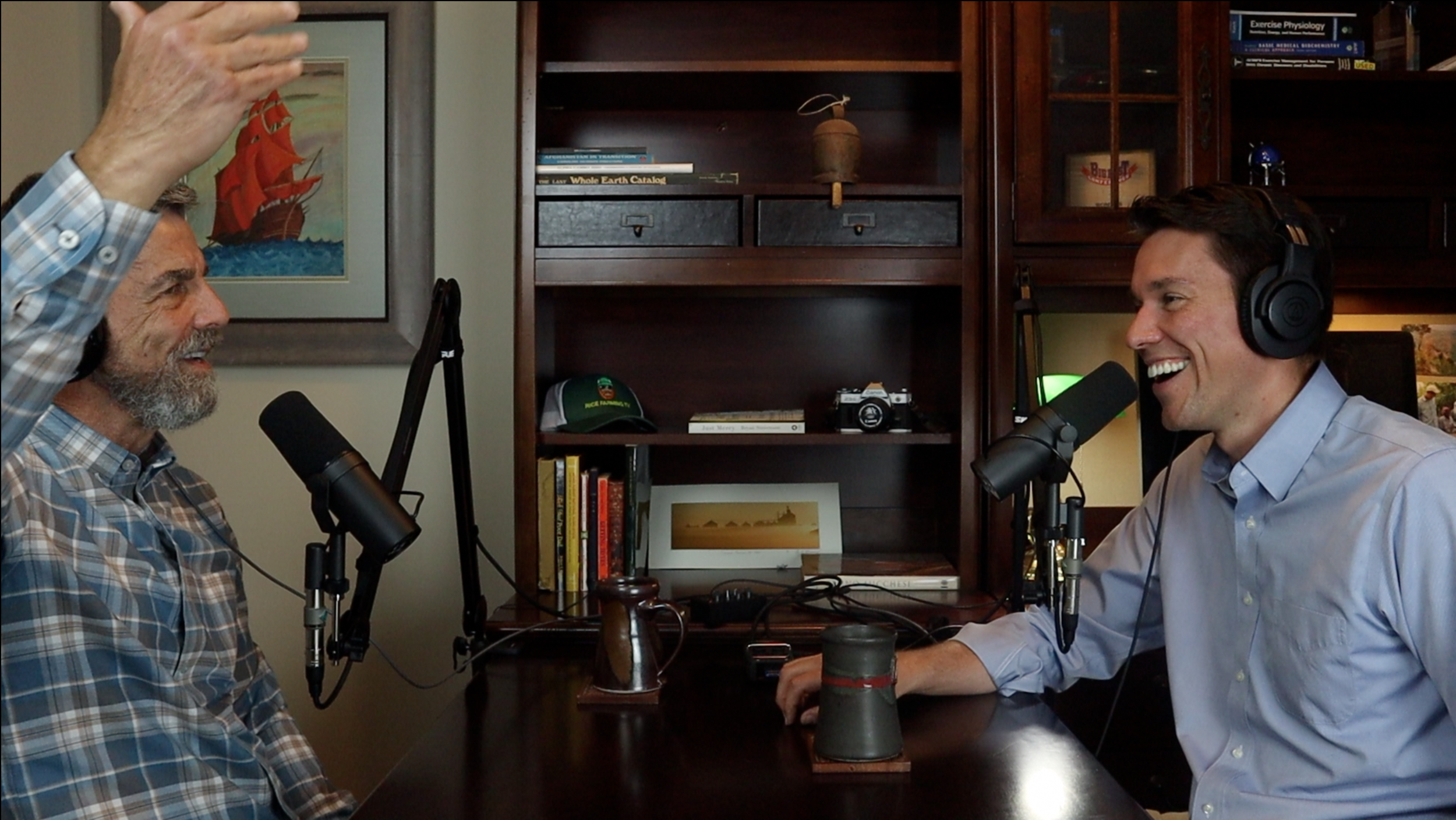
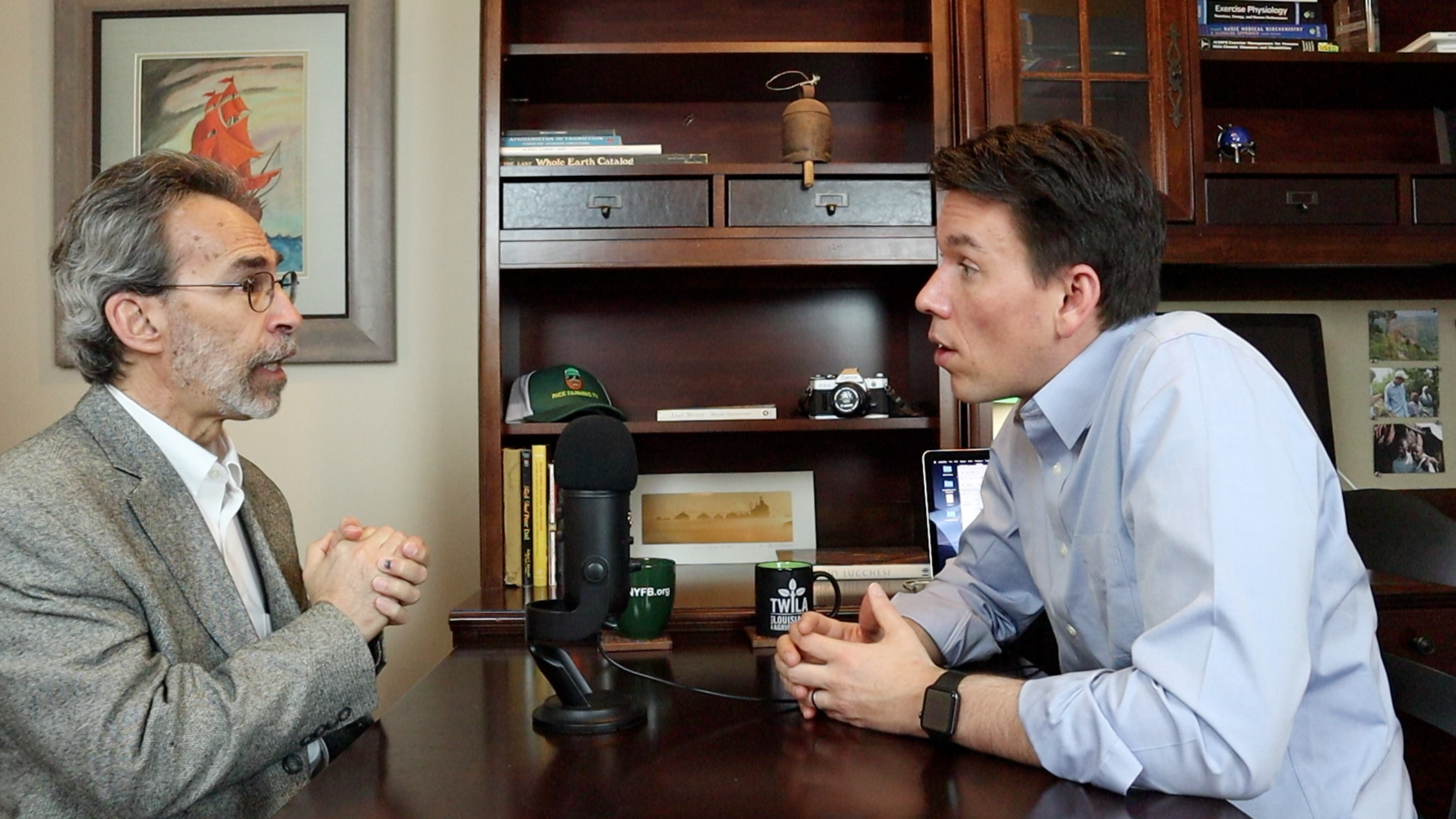
My mentor, Fred Perlak, was a career scientist at Monsanto, an agriculture company that created GMOs and pesticides we recorded one of our long conversations.
Fred Perlak Ph.D. is a retired scientist from Monsanto. During this interview he discusses the likelihood that glyphosate (RoundUp) causes cancer, how disruptive Monsanto was to the pesticide industry, and gives a metaphor to understand how you can engineer a plant to resist an herbicide that kills almost all other plants.
Perlak ran the Hawaii site for Monsanto, a site critical to Monsanto’s seed operations. Prior to that he was a key member of the scientific team that created Bt cotton, a GMO that protected the plant from being eaten by specific insects.
Fred is on Twitter: @FredPerlak
Follow the Vance Crowe Podcast
Vance Crowe Podcast Facebook Page
Twitter: @VanceCrowe
About The Vance Crowe Podcast:
The Vance Crowe Podcast interviews experts in unexpected fields and gets them to reveal the discoveries that come from having a knowledge of a highly specific discipline. Vance Crowe is the CEO of Articulate Ventures (www.VanceCrowe.com) a communications strategy company- and he is regularly invited to deliver speeches around the U.S. and Canada teaching audiences how to communicate so that others want to listen, understand and value what you have to say.
Civil war, inflation, food: Lawrence Mattock
What is it like to watch your money get inflated by more than a billion percent?
Lawrence Mattock was a child when the Rhodesian Civil War began. During this interview we discuss what it was like to be a soldier, life after Robert Mugabe came to power, obscene levels of inflation, and a cultural food company Lawrence has built from the ground up.
In this clip Lawrence discusses what it was like to learn that his savings and future earning potential were being inflated.
In this section, Lawrence talks about a food company he has started during his retirement years after spending a lifetime traveling through some of the toughest places in Africa.
Strange Dounuts' Jason Bockman
Drugs, jail, escaping a cult, and now running exceptional businesses- Jason Bockman has integrated his shadow, and is one of the most exceptional people I’ve ever met.
I ran into Jason Bockman at the gym a few weeks ago. He had seen my podcast featuring cannabis entrepreneur, Tony Sansone III and he wanted to tell me that he liked it. I told him that my podcast was all about interviewing people with an expertise and he responded, “the only thing I think I have an expertise in is hiring great employees and keeping them engaged.”
Bockman owns a famous Saint Louis donut company called “Strange Donut,” people here love it. He went on to tell me that he had a less than 2% annual turnover rate of his employees. In an industry with over a 130% turnover rate, this is nothing short of astounding. I was intrigued so I invited him over to the studio. I wanted to have him on the podcast because I like his personality and he runs a cool shop, I had no idea what I was in store for.
As we talk about during the episode, Jason and I had known each other for years. We had always been friendly but never made the time to get together. This was a serious oversight on my part, because once I got to know Jason during the interview, I realized he is a man that grew up in a dungeon, went through hell and is now living in a palace that he has built after so much of his shadow has been integrated into his life.
We talk about business lessons too:
Jason runs at least two businesses that we discussed, but I get the sense that he has even more going on. We deep dive into keeping ahead of the competition and how to create trends instead of getting swept up by them.
Catch the full recording here:
During the introduction I spoke about the South Dakota State University Collegiate "Learn, Grow, Lead Conference;" October 11-13 that I will be giving a talk at. For more information visit their website:
If you enjoyed this podcast- consider giving it a review- or just tell a friend about it so that they can listen too. Interact with me on Twitter @VanceCrowe

Farmers Rob Sharkey & Megz Reynolds
Two farmers stopped by the studio and discussed the biggest issues facing farmers today: Huawei extradition impacting Canadian farmers, Thank a Farmer Campaigns, Checkoff programs and so much more.
Rob Sharkey and Megz Reynolds are two of the biggest names in U.S. & Canadian agriculture. Megz Reynolds is a grain farmer from Saskatchewan, Canada and Rob Sharkey is a corn and soybean farmer from Illinois.
During the episode I spoke about the South Dakota State Farm Bureau Collegiate Conference October 11-13th. If you are interested to learn more check out their Eventbrite Page for tickets and more information: https://www.eventbrite.com/e/learn-grow-lead-collegiate-midwestern-farm-bureau-conference-tickets-68268357495

Rob Sharkey is host of "The Shark Farmer Podcast," a daily XM radio show and "The Farmer and the City Girl Podcast" with Lesley Rae Kelly. Rob has completely upended the agriculture communications world by hosting a podcast that talks about the social and cultural issues farmers face. You can follow Rob Sharkey on Twitter @sf28430
Megz Reynolds is a social media phenomenon. She has built up a huge Twitter following as she has also run for political office in Canada. Megz is a powerful voice in Canadian agriculture, speaking about trade, transportation and many other issues important to farmers. You can follow Megz @farmermegzz
Follow Vance on Twitter: @VanceCrowe

Trucking Exec: Camden Civello
You see trucks all of the time. Literally everything you buy comes from a truck at some point. But what do you know about the world of semis? This week I sat down with Camden Civello, the Executive Vice President of LTI Trucking to get a sense for what is going on in the field that has 3.5 million truckers and employs more than 8.7 million people.
Camden is mild mannered and introspective. His perspective of the industry comes from more than 10 years in the industry and he has some interesting thoughts on the major shortage of truck drivers in the US.
Camden sees other problems in the industry as well. Such as not enough public parking spots for long haul drivers.
Banker Rita Kuster
Rita Kuster is the Chief Credit Officer for Saint Louis Bank, a community bank. For full disclosure, I met Rita because I am a member of the board of directors- which is how I knew that she has a special way of describing banking that makes it relatable.
During this interview, Rita describes her biography starting at a “banker’s bank,” becoming a regulator at the Federal Reserve Bank in Saint Louis, Missouri, and then being a banker during the financial crisis. She took a new position at Saint Louis Bank as the Chief Credit Officer and after working with her for over a year I was grateful that she was willing to sit down with me to discuss banking.
Rita discusses the challenges of preventing “Too Big To Fail” banks, how a person can get a loan, and the weird things she knows bankers have repossessed when a customer couldn’t pay their loan. Rita is very open in this conversation- offering opinions that are well thought out and not heard very often.

PGA Golfer Jay Delsing
I have almost no natural interest in golf, but a friend of mine recommended that I meet PGA golfer Jay Delsing. Jay is fit, joyful and passionate; and his expertise in golf was obvious once we sat down to talk.
We talked about if it is worth it to purchase expensive golf clubs, why people quit golf, and how Jay’s mediation practice led him to a psychedelic experience. It was an amazing conversation.
Jay Delsing is a legendary PGA golfer from Saint Louis, Missouri. During this interview Delsing talked about why people are quitting golf, how important are golf clubs, how expensive golf balls help you drive farther. Jay also opens up and talks about how meditation can improve your golf game and how breathing can clear your mind.
A star athlete from St. Louis, MO Jay entered the PGA straight out of college and then stayed among the top 125 golfers in the world.
@JayDelsing on Twitter
www.jaydeslinggolf.com
@VanceCrowe on Twitter

Podcast: YouTuber with 6.5 Million Subscribers
I was shocked to discover that my neighbor is a major personality on YouTube and is the CEO of an extraordinary online shop called Vat19.com.
Jamie Salvatori is a guy you almost always see wearing T-shirts. He’s understated, humble and almost no one in the “regular world” has any idea who he is or what he does.
Jamie stopped over to the studio late one evening and we talked about how he got his start, what he thinks about kids exploring YouTube, demonetization of certain content and so much more. I loved the interview, and unlike most of the conversations I have… when this interviewed wrapped up, I was even more intimidated by Jamie because I finally realized just how amazing he is.
Jamie Salvatori is a digital entrepreneur that has created a online retail business that sells unorthodox toys, candies and games. To market his products, Jamie has built a YouTube channel that gets millions of views per video- some of them over 100M views. Vat19.com is one of the most mesmerizing and fun channels online.
Jamie talks about who makes money on YouTube, how YouTubers make money and how advertising revenue compares to mainstream media dollars.
Follow Vat19:
Facebook: https://facebook.com/vat19
Instagram: https://instagram.com/vat19/
Twitter: https://twitter.com/vat19
Jamie is extremely humble and has a very good handle on the nature of celebrity:
Jamie is very open to treating kids in an honest manner, but even he struggles with opening the door to social media at too young of an age:
Check out the Vance Crowe YouTube Channel for the full interview with Jamie Salvatori.
Follow the Vance Crowe Podcast
Facebook: The Vance Crowe Podcast
Twitter: https://twitter.com/VanceCrowe

Conversation with web developer Chris Oliver; "Do things that scare you."
Businessman, software developer, podcaster, world traveler. One of my closest friends, Chris Oliver stopped by the studio to have a conversation about his philosophies, education and ways of thinking.
Chris Oliver is founder of Go Rails an online computer programming teaching program that teaches developers how to create new website features. Chris Oliver is an extraordinary thinker, a person that can imagine entirely novel solutions to very complex problems.
Chris Oliver's Go Rails program is used by more than 22,000 people and Oliver is considered an expert in his field, being regularly invited to deliver talks at software developer conferences.
Chris, along with Square founder Jim McKelvey, founded Launch Code a nationally recognized pair-programming school that teaches people to code. Chris uses the mantra "Do things that scare you" which has led him to programming at companies in New York City, Saint Louis, Germany and be regularly recruited by Silicon Valley companies. Chris Oliver hosts two podcasts "Business Time" a podcast about what it is like to start a business from the perspective of two software developers, and "Remote Ruby" a podcast for Ruby developers.
Clinical pharmacist discusses prescriptions, essential oils, & working in a drugstore
I’ve always wondered why it takes 25 minutes for a pharmacist to count out 28 pills. The white lab coat standing in the back of a brightly lit drug store seems like a highly paid prison guard- ensuring that all the drugs are protected. I didn’t know how my conversation with clinical pharmacist Kelly Erdos would go, how much could there be to know?
Erdos is a family friend. She has a giant personality with the biggest laugh I’ve ever heard- I knew there must be more to her profession than meets the eye, but I really didn’t understand how much education pharmacists have, the challenges they help regular people solve, or just how horribly wrong things can go when patients don’t understand their medicine.
Erdos is a clinical pharmacist, which is different than the retail pharmacists that we see on a regular basis, but she did a great job helping me to understand - why it takes so long to fill my prescription, and what to look for when searching for a pharmacist that may make a huge difference in my medical care. She talks about her time working in poison control, essential oils, moderation around CBD and cannabis, and what to look for when deciding to move pharmacies.
Here Erdos describes why it is difficult to automate the role of the pharmacist:
You can watch the entire interview on my podcast channel or by checking it out on your favorite podcasting app.
Vance Crowe's Twitter: @VanceCrowe

Registered Dietitian talks about dieting, calories and alcohol.
Over that last four years, I’ve lost around 45 pounds. It took me years to understand how to eat so that I could lose weight, not fall off the wagon and still get stronger from lifting. I have a lot of opinions about weight loss- and so I decided to test that knowledge with a nutrition and dietitian expert, Connie Diekman.
Connie Diekman is the former president of the 100,000 member Academy of Nutrition and Dietetics. She has a background in lipids research and has worked with people that have eating disorders and was the nutritionist for the Saint Louis Rams.
Connie has appeared on Good Morning America, Oprah, and spoken before the congressional hearings that determine the FDA food guidance like the Food Pyramid and MyPlate.
Connie was quick to bring up a subject that she is passionate about, the failures of diets that are overly simplistic, have too many rules and can’t be adhered to, what she calls “Fad Diets.” One in particular that we discussed is the “Keto Diet,” where Connie revealed what happens when someone stops following their strict ketogenic (mostly fats and protein) diet:
Another surprising part of the conversation was how alcohol is metabolized by the body. Very interesting to realize how one should count the calories in their drinks:
Connie's Twitter: @CBDiekman
For more information about the Academy of Nutrition and Dietetics: EatRight.org
Vance Crowe's Twitter: @VanceCrowe
During the conversation we discuss controversial nutrition topics; "calories in, calories out"; the ketogenic diet, "tracking macros" and various diet fads.

St. Louis Detective shares what it is like to be a cop
Within five minutes, I had torn up my index card of questions and just paid attention because Detective Bob Bayes had just shocked me with how candid he was willing to be.
He was prepared to talk about being a beat cop, solving murders, conducting sting operations, going undercover, and even what happens when the higher-ups wanted a report to be written incorrectly.
This interview gave me a whole new appreciation for the challenges of being a police officer in today’s world. Detective Bayes discusses what it feels like to have the community be angry at him for doing his job, the dark side of legalized prostitution and why he thinks police body cameras have drawbacks.
Detective Bayes even told stories about when they accidentally caught the county prosecutor in a prostitution sting.
And the story of catching the murderer of a 10 year-old girl was so shocking, in the middle of it, I start looking around to make sure my audio and video equipment was getting all of what he was saying.
“On the blanket there was aluminum shavings; and there were paint chips some white some orange. So that’s one of your clues... so what are you looking for?”
If you are enjoying the podcast, I hope you will subscribe, give us a positive review, share, or shoot me a tweet @VanceCrowe
Honey bee expert talks colony collapse & Africanized bees
With such a wise, weather beaten face, it is surprising that international honey bee expert Jerry Hayes is so self effacing. If he wanted to, he could look stern, but he is so quick with a smile that you can’t help but feel at ease. He is a hero in the eyes of many and yet he simply won’t accept accolades or praise. It makes him fun to interview… but a little wiley.
We spoke about honey bee behavior, colony collapse disorder, and Jerry even told about the first time he saw Africanized “Killer” bees (at the autopsy of a 900 lbs horse!)
The conversation was wide ranging and fun. Jerry and I are long time friends that worked together for 4 years while at Monsanto in Saint Louis, Missouri.
A few days before I did the interview, I went to Facebook and asked if anyone had questions. In less than an hour I had over 30 different questions. I will have to remember for later that the group often thinks of a lot better interview questions than I do.
There are two fun clips I took from the full interview:
This next clip, you will notice that I had to back away from the new microphones because I was so shocked by what I heard that I didn’t want to blow out the sound when I reacted to what he was telling me. The entire interview is great- but this clip about killer bees is the best thing I have recorded to date.
If you like what you see and hear, subscribe on YouTube or on your podcast player. Also if you want to get some updates from the company sign up below!

Starting is more productive than thinking about starting.
I’m proud of the first 5 podcasts.
I wasted several years giving myself reasons why I couldn’t s
When I first started to commit to doing an interview show, I filled with energy- the kind that motivates you to get something started.
I did all of the easy things first. Scheduled a guest, got out my old Yeti microphone, cleared some space on my hard drive, and even went out to buy a camera.
But then things got complicated. I didn’t have enough storage space, the room I was going to use had too much echo, my camera had an unknown 30 minute time limit for recording video…
Slowly my motivation waned, and then frustration started to grow. I hit a point where the harder I worked the more things I had to
Once you have something created, now you can start editing and improving… but you are already living your dream. Now, you need to create the habits that keep that dream going. You can’t rely on motivation, because motivation is an emotion and it will wane when things it tough or confusing, or you have to take 5 steps backwards.
If you can get comfortable being a novice, than you can learn to master a skill.
Thanks for checking these out as I got started. With the lessons from the first five interviews, I made some serious studio upgrades- and things are about to get really good.
Below are the tiny steps I took to get better. You can hear the audio get cleaner, see the lighting get softer, and hopefully the editing better.
If you aren’t a YouTube person you can get the RSS feed here: https://feeds.transistor.fm/the-vance-crowe-podcast
Or just ask Alexa or Siri “Play the Vance Crowe Podcast”
Week 2: Doug Sammons Ph.D.; Biochemist
Week 3: Randall Comfort; Architect
Week 4: Shirley Sahrmann Ph.D.; Physical Therapist
Week 5: Allen Soffer MD; Cardiologist
Saint Louis Cardiologist Allen Soffer MD tells what the medical community has discovered about the real cause of heart attacks- and the answer is surprising. Allen Soffer is a medical doctor that has extensive experience and knowledge of the heart. In this interview he discusses the way we used to view heart attacks, and what we have discovered more recently.
A heart doctor opens up.
There is nothing quite as intense as being listened to by Dr. Allen Soffer. He looks squarely into your eyes, he is wordless, and he will patiently wait until you are done before speaking.
It is a sensation that is as disarming as it is endearing. There are so very few times in life when a person gives you their complete attention. This conversation was a joy because the man that normally is the listener became the storyteller.
Allen Soffer is a cardiologist with a 30 year career in Saint Louis. During this conversation Dr. Soffer discusses what happens to medical students when they graduate at the top of their class and realize no one is grading them any more. He also discusses what the medical field has discovered about what really happens during a heart attack, and what it is like to be talking with a patient that realizes their health may not allow them to live much longer.
Dr. Soffer also discusses his family's work on World Food Day Saint Louis: https://stlwfd.org/and what the core mentality has to be when you are discussing life and death issues with patients.
You can find Vance Crowe on Twitter: https://twitter.com/VanceCrowe
Vance's company website: https://www.vancecrowe.com/

Podcast: Shirley Sahrmann, A woman that can fix your physical pain
Today’s podcast guest is Dr. Shirley Sahrmann, P.T., Ph.D. an expert on human movement. She can watch you move and most of the time figure out what is causing you pain and why.
This interview was a little nerve wracking for me. My wife, Annie, is a physical therapist that adores Dr. Sahrmann. She conveyed to me the impact that Sahrmann has had on the field of physical therapy. I knew that Annie would listen to the interview (I discovered on our walk last night that she hasn’t listened to any of my other podcasts because “they make me too nervous...”) and she would be unable to hide her opinion of my questions and interaction.
Communications is funny that way. Here I was talking to a literal world expert, (Sahrmann was en route to teach in Japan when she stopped by the studio) and a significant portion of my stress came from worrying about what sweet Annie would think.
Sahrmann is a sweet woman with a soft voice and a cute laugh that she shares as often as she can. But Sahrmann is also a force of nature, she pushed the field forward when medical doctors did not have respect for the musculoskeletal movement system.
I learned about the value of headrests in cars for tall men, why not all girls can be ballerinas or cheerleaders, what happens if you slouch in your office chair all day long, and what Sahrmann thinks of chiropractors.
Here is the RSS Feed for the audio version of the podcast: https://feeds.transistor.fm/the-vance-crowe-podcast
You can now ask Siri and Alexa to “Play the Vance Crowe Podcast”
I’ll certainly get feedback from Annie, but I hope to hear from you as well- comments on YouTube make a big difference in how many people see the interview.
Why I left Monsanto/Bayer to return to my own company.
I came to Monsanto five years ago to try to solve the question of why people are afraid and angry about how their food is grown. I see even bigger challenges on the horizon.
Long ago, I came to the conclusion that, for me, a life worth living is one oriented toward the largest problems that I am capable of helping to solve. That is what took me on a path that spanned from being a deckhand on an eco-tourism ship, to the Peace Corps, the World Bank, and eventually as the Director of Millennial Engagement at Monsanto. Each of these experiences offered me new ways of thinking and exposed me to the lessons that can only be learned through experience. Each chapter closed when I found balance that I didn’t have before, realized that it was time for change, and prepared to move on.
I didn’t set out to take a job at Monsanto. But, I quickly realized that I had stumbled onto an intriguing question: if we are growing food more bountifully than at any other time in human history, why are people afraid and even angry about where their food comes from? Answering this question may prove to be the most important problem in the modern world, because fearing one’s food is a dangerous thing. I was hired to find some way to communicate with a public that had, at least in part, come to the conclusion that Monsanto’s part in growing food was dangerous and dark.
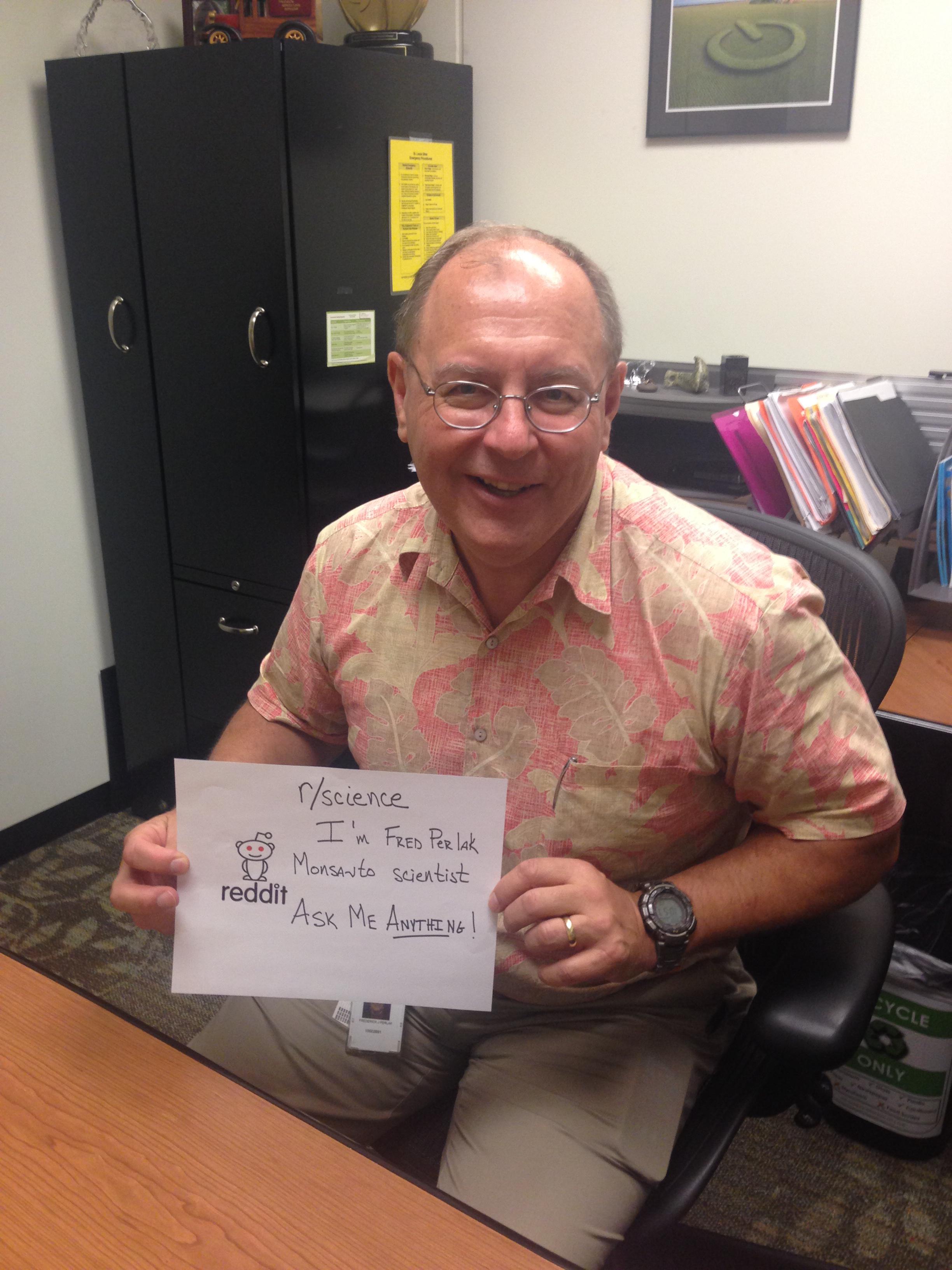
Fred Perlak Ph.D. hosted one of the highest rated Science “Ask Me Anything” in the history of Reddit
The work I contributed towards at Monsanto/Bayer made incredible in-roads. We had one of the highest rated Reddit Science AMA’s in history (we often thought of it as more impactful than a Super Bowl ad). We showed that a Fortune 500 company could derive value from answering tough questions on obscure podcasts. We figured out the right venues to let scientists speak for themselves. And we learned many things that didn’t work.
I respect my former colleagues immensely; our work trying to engage a curious public was fulfilling, exciting and meaningful. I am grateful that they invited me in and supported me in trying a completely unorthodox strategy. I respect the company Monsanto was, and I believe Bayer is poised to be a force for good. It was a tremendous opportunity to work at Monsanto.
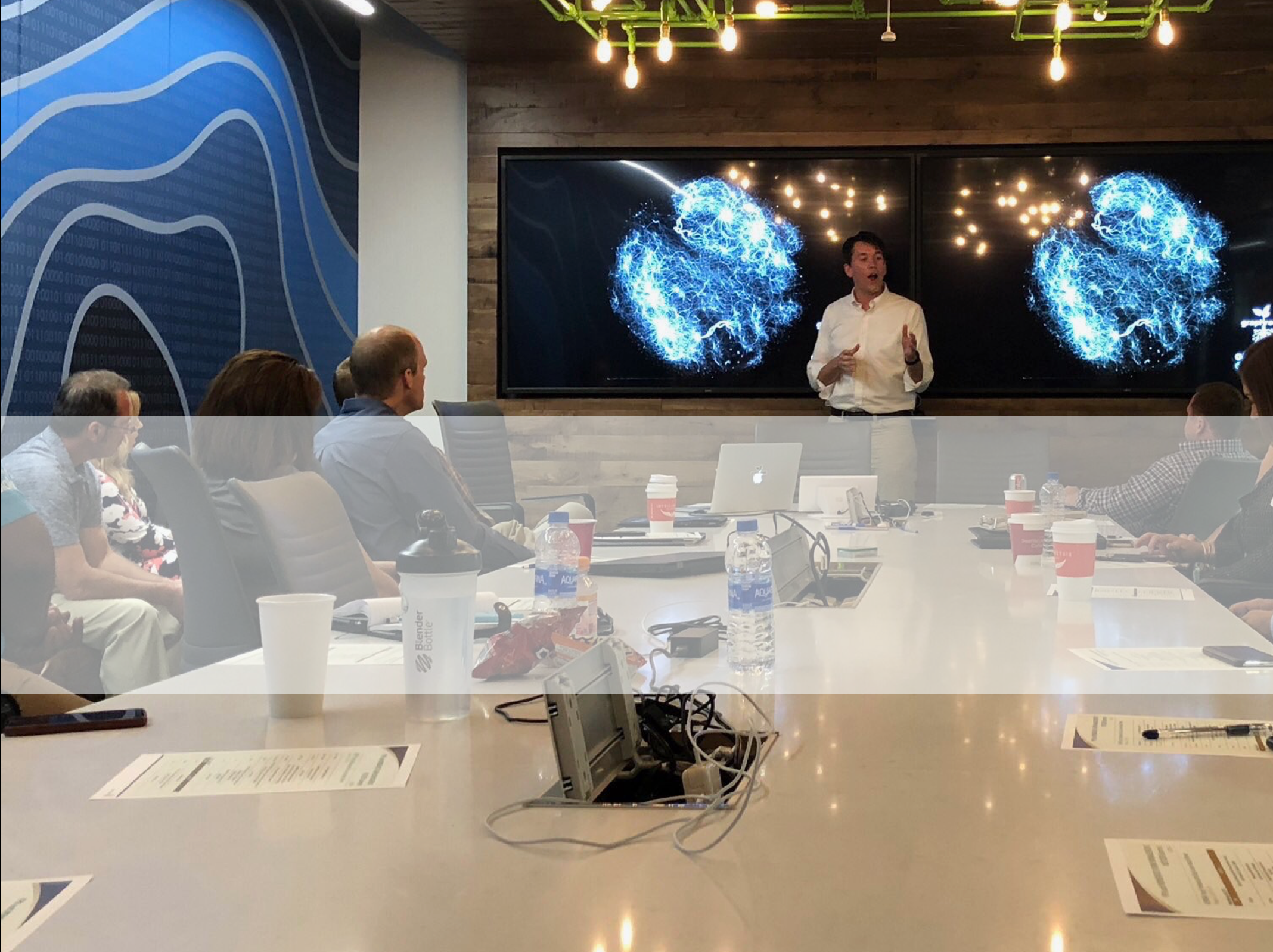
I was most proud of delivering speeches to more than 90,000 people. Talking with farmers, scientists, students, artist, dietitians and concerned citizens taught me deep and humbling lessons. I had no choice but to learn how to communicate when some people came to my talk expecting that I would be evil or selling something nefarious. Sometimes people posed questions designed to inflict damage, over time I came to embrace these interactions because they made me get better. I learned what it takes to say something valuable even when no one in the room agrees with you.

Vance Crowe at a Skeptics in the Pub event in the U.K.
I now know what it takes get others to pay attention to your perspective and what you can do to explain yourself more clearly even when people disagree. I hope that farmers, scientists, industry groups, and teachers invite me to share what I have learned because these skills may be the difference between success and failure in the modern age.
Now what?
I have come to deeply cherish the experience of working with the farming community, and I hope that continues.
I have also come to realize that the divide between companies and regular people has serious consequences. This won’t stop with GMOs and vaccines; every technology that becomes significant in our lives runs the risk of being maligned to the degree that it can be banished from society.
I am returning to my own company, because I see the deep need for a different type of communications consulting, the need is greater than row crop farming. I want to help companies be dramatically better at understanding why people don’t agree with them, and come to terms with the changes they need to make to become a group that others listen to, respect and even ally with. I hope to stay in agriculture and believe there are other industries to work with as well. I am excited about this next step.
I am open to learning about what you think is the most important problem in your world, perhaps I can help.
Also, I launched a podcast. I’m interviewing scientists, architects, financiers, and many others.